|
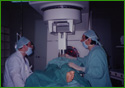
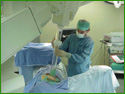 Intraoperative
radiotherapy (IORT) serves to administer large doses of radiation
during surgery. During surgery, healthy tissue/organs can be shifted
out of the radiation beam, thereby reducing toxicity. Moreover,
being visible, the lesion can be targeted with greater precision.
The advantages of IORT are: Intraoperative
radiotherapy (IORT) serves to administer large doses of radiation
during surgery. During surgery, healthy tissue/organs can be shifted
out of the radiation beam, thereby reducing toxicity. Moreover,
being visible, the lesion can be targeted with greater precision.
The advantages of IORT are:
a) It enhances the surgical result because it eliminates eventual
tumor residue.
b) It enhances the antitumoral effect of radiotherapy because much
higher radiation levels are achieved compared with external irradiation
alone.
c) It reduces the interval between tumor removal and irradiation:
consequently, residual cells do not have time to grow.
Intraoperative
therapy was first used in the 1920s, but the instrumentation available
at that time limited its use. The major obstacle to IORT was that
the patient, under anesthesia and with the surgical wound open,
was transported from the operating theatre to the radiotherapy service
and return to complete the operation, with consequent organizational
problems, and increased risk of infection. Now in some institutes
the procedure the procedure is completed in or very near the bunker.
|